
🎉 Website under Development | Launch Offer —Get 10% off on your first order | Free delivery on orders above ₹999 | 1-Year Warranty on all products
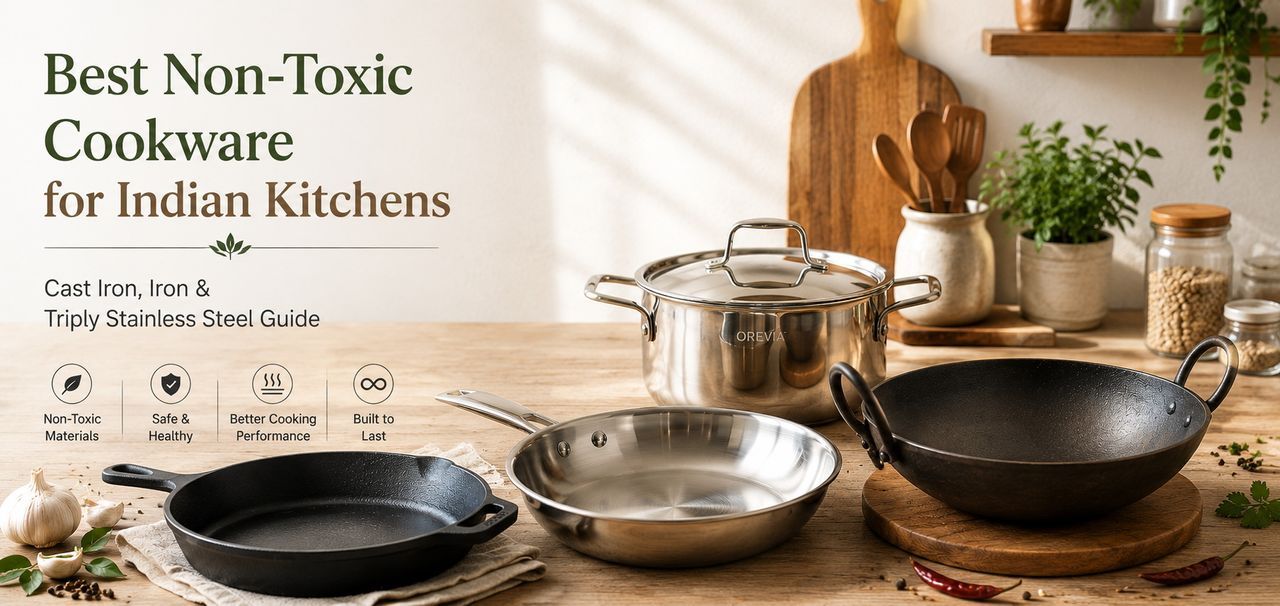
For years, Indian kitchens were dominated by aluminium utensils and non-stick cookware. They were affordable, lightweight, and convenient. But today, Indian consumers are changing the way they think about cooking. More people are searching for healthier, safer, and long-lasting cookware options for their homes.
Search trends across India now show rapidly growing interest in topics like “non-toxic cookware,” “healthy cookware,” “cast iron cookware,” and “triply stainless steel cookware.” This shift is being driven by increasing awareness about food safety, chemical coatings, and long-term health. (The Indus Valley)
As modern lifestyles evolve, cookware is no longer seen as just a kitchen tool. It has become an important part of healthy living.
Non-toxic cookware refers to cooking utensils made without harmful chemical coatings or unsafe materials that may react with food during cooking.
Many traditional low-quality non-stick pans contain synthetic coatings that can degrade over time when exposed to high temperatures. Once scratched or overheated, these coatings may release unwanted substances into food. Because Indian cooking often involves high heat, deep frying, roasting, tadka, and acidic gravies, cookware quality becomes even more important. (Kichera)
This is why consumers are now moving towards safer alternatives such as:
These materials are known for durability, heat retention, and chemical-free cooking.
Indian cooking is unique. Most dishes involve:
Cooking acidic foods like tomato and tamarind
Low-quality cookware may not perform well under these conditions. Consumers are now realizing that investing in durable cookware not only improves cooking performance but also supports healthier eating habits. (Suncasa)
Health awareness after recent years has also accelerated this change. Families are now paying closer attention to the materials used in their kitchens.
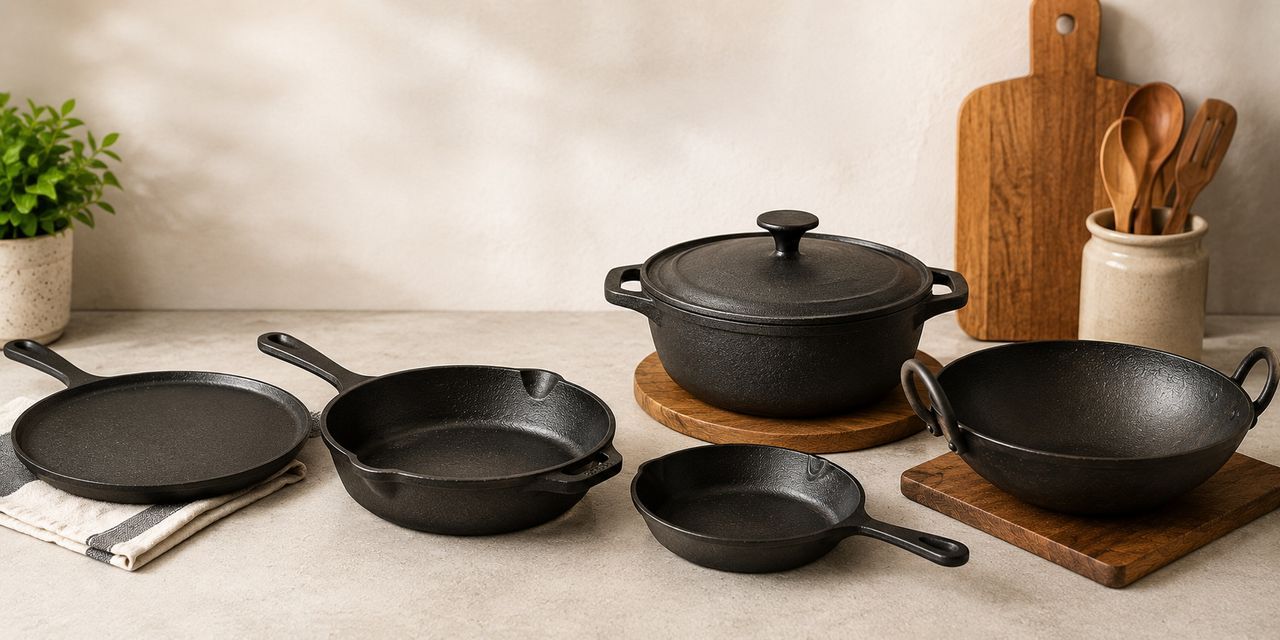
Cast iron cookware has existed in Indian kitchens for generations. Before modern coatings became common, households relied heavily on iron and cast iron utensils for daily cooking.
Today, cast iron is making a major comeback.
One of the biggest reasons is its natural cooking surface. Properly seasoned cast iron develops a naturally smooth layer over time without requiring synthetic coatings. (The Indus Valley)
Cast iron retains heat extremely well, making it ideal for:
With regular seasoning and usage, the surface improves naturally.
A high-quality cast iron pan can last decades.
Many people believe food cooked in cast iron develops richer flavor and texture.
Because of these benefits, searches for cast iron cookware in India continue to rise rapidly. (The Indus Valley)
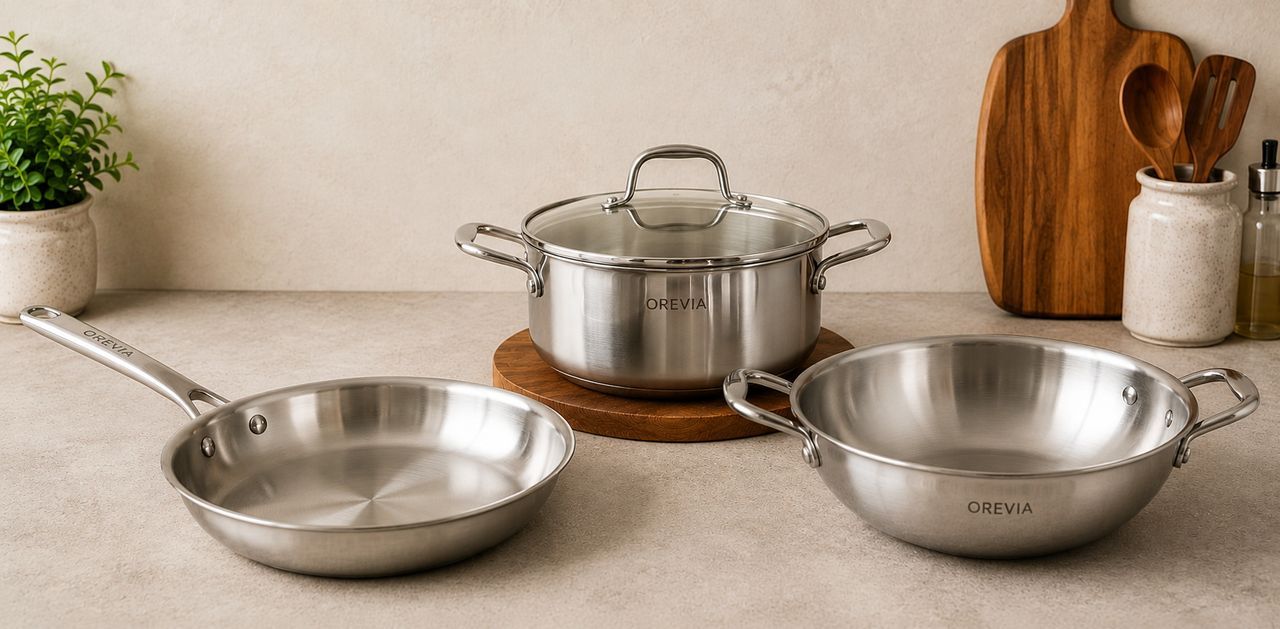
Triply cookware has become one of the fastest-growing cookware categories in India.
Unlike ordinary stainless steel utensils, triply cookware uses three layers:
This construction improves heat distribution significantly. (Stahl Kitchens)
Food-grade stainless steel does not react with acidic foods like tomato or lemon.
For Indian cooking styles involving curries, gravies, sautéing, and boiling, triply cookware has become a preferred modern option.
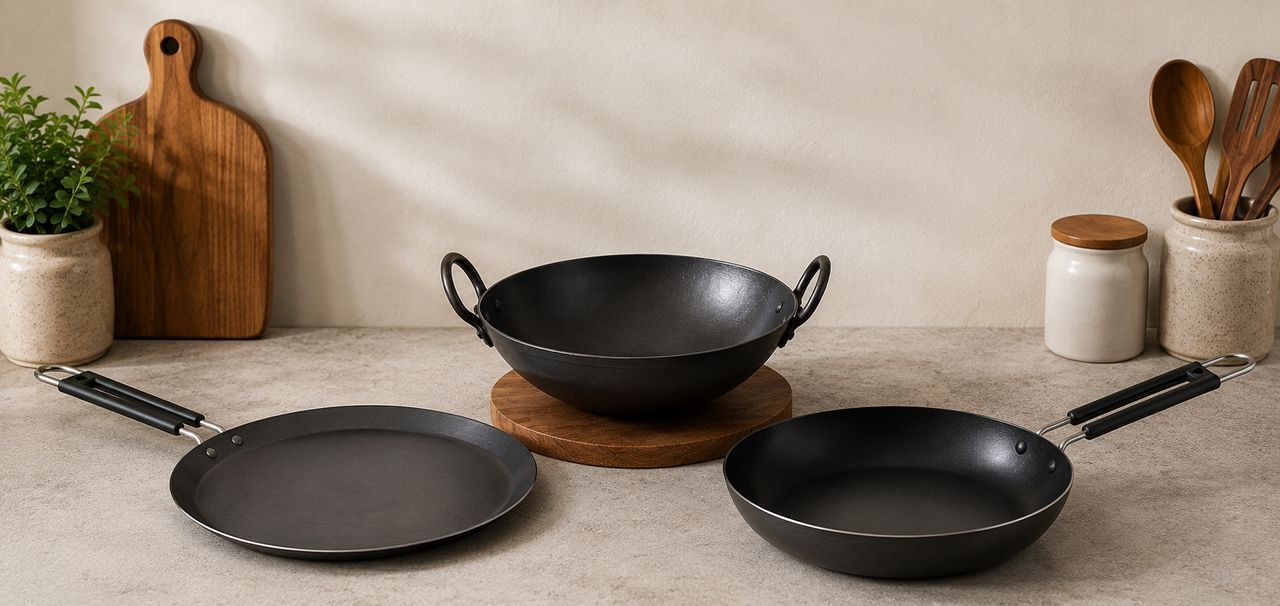
Iron cookware is another category experiencing renewed popularity in India.
Unlike cast iron, iron cookware is generally lighter and heats up faster. Many Indian households prefer iron tawas and kadais for daily cooking.
Chapati and roti making
Dosa preparation
Stir frying
Sabzi cooking
Consumers looking for traditional and natural cooking methods are increasingly choosing iron cookware over synthetic-coated alternatives.
Many low-cost cookware products focus mainly on appearance and convenience. However, durability and safety are becoming bigger concerns among consumers.
When poor-quality coatings wear off, the cookware often becomes unusable within a short time. This leads to repeated replacement costs and unnecessary waste.
High-quality cookware materials such as cast iron and triply stainless steel may initially cost more, but they often last for years or even decades.
Consumers today are increasingly viewing cookware as a long-term investment rather than a temporary purchase.
Different cookware materials serve different cooking needs.
| Cookware Type | Best For |
|---|---|
| Cast Iron | High heat cooking, dosa, frying |
| Iron Cookware | Daily Indian cooking |
| Triply Stainless Steel | Curries, gravies, boiling |
| Stainless Steel | General-purpose cooking |
A modern Indian kitchen often benefits from having a combination of cookware types rather than relying on just one material.
The Indian cookware market is clearly moving towards:
Consumers are now actively searching for cookware that combines performance, safety, and longevity. This is why categories like cast iron cookware, iron cookware, and triply stainless steel cookware are growing rapidly across ecommerce platforms and search engines. (The Indus Valley)
The cookware industry is no longer only about convenience. It is now about healthier lifestyles and smarter kitchen investments.
The cookware we use every day directly affects how we cook, eat, and experience food. As awareness grows across India, more families are shifting towards cookware that is durable, safe, and built for long-term use.
Whether it is the traditional strength of cast iron, the simplicity of iron cookware, or the advanced performance of triply stainless steel cookware, consumers are rediscovering the value of quality cookware.
For modern Indian kitchens, healthy cooking starts not only with ingredients — but also with the cookware itself.

