
🎉 Website under Development | Launch Offer —Get 10% off on your first order | Free delivery on orders above ₹999 | 1-Year Warranty on all products
Indian kitchens are changing rapidly. Consumers today are no longer choosing cookware based only on convenience or appearance. Health awareness, durability, cooking performance, and long-term safety have become major deciding factors while purchasing cookware.
Among all cookware debates, one comparison dominates online searches across India:
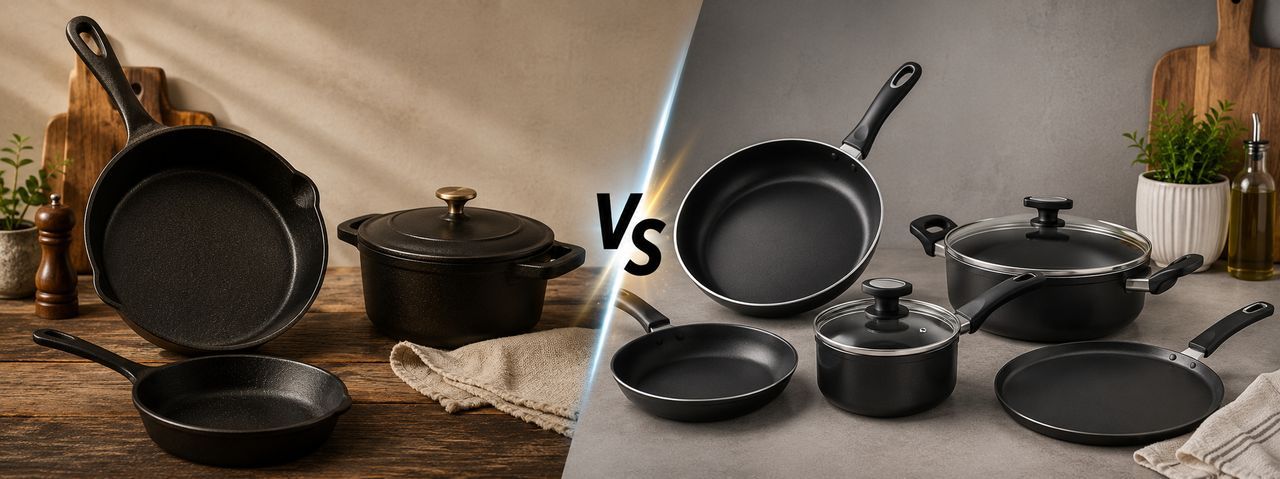
Millions of Indian households still use non-stick pans daily for dosa, omelette, paratha, vegetables, and low-oil cooking. At the same time, cast iron cookware is making a massive comeback as people rediscover traditional cooking methods and healthier alternatives.
But which cookware is actually better?
The answer depends on:
your cooking style
health priorities
maintenance preference
cooking habits
long-term investment goals
This detailed guide explains everything Indian consumers should know before choosing between cast iron and non-stick cookware.
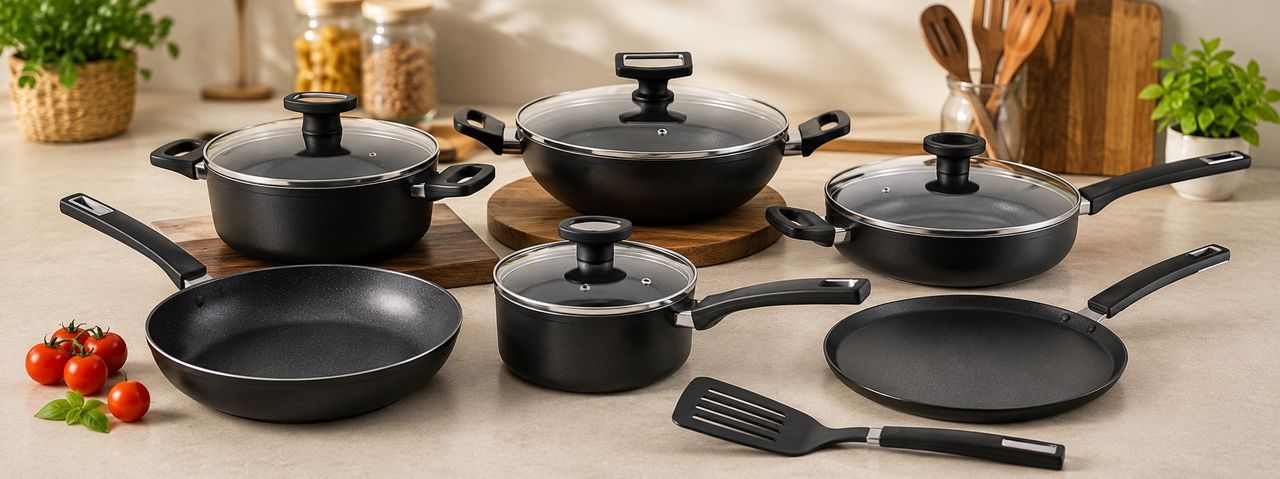
Non-stick cookware became popular because of one major reason:
Food releases easily from the surface, making cooking and cleaning extremely simple.
Most non-stick cookware uses a synthetic coating over aluminium or metal surfaces. This coating reduces sticking and allows cooking with less oil.
For busy households, this seemed revolutionary.
Today, non-stick cookware is commonly used for:
dosa
omelette
pancakes
cutlets
paratha
stir frying
low-oil cooking
Its popularity grew especially in urban Indian kitchens where quick cooking became important.
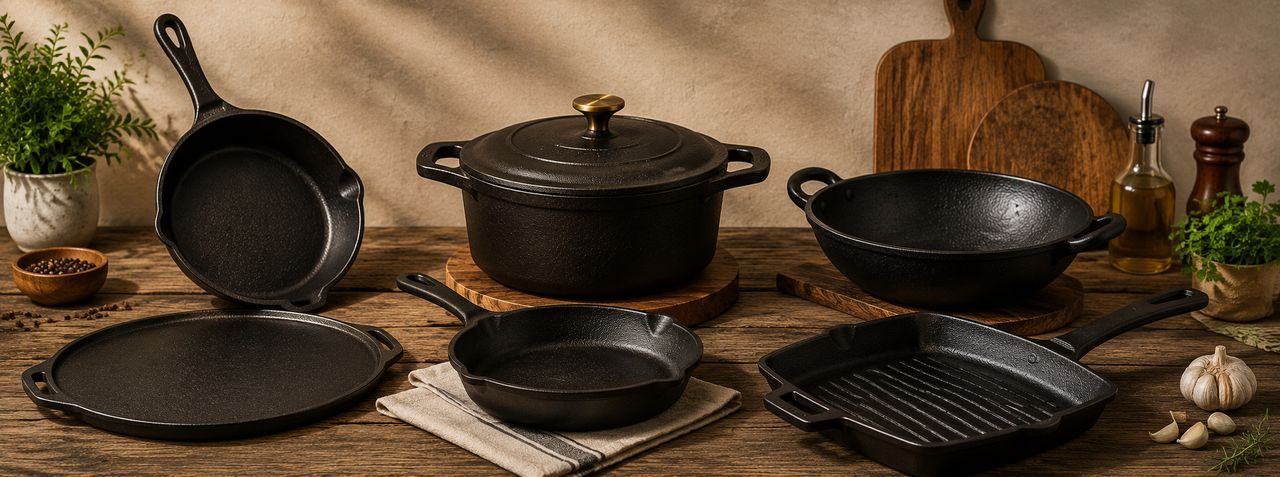
Before non-stick cookware entered Indian homes, cast iron cookware dominated kitchens for generations.
Our grandparents cooked daily using:
cast iron tawas
iron kadhais
heavy skillets
traditional pans
Cast iron cookware is made by pouring molten iron into molds, creating thick and durable cookware with excellent heat retention.
Unlike synthetic-coated cookware, cast iron develops its own natural seasoning layer over time.
This seasoning improves continuously with usage.
Today, cast iron cookware is returning because consumers are becoming more conscious about:
chemical-free cooking
durability
traditional cooking
healthier cookware options
This is where the entire debate begins.
Uses a factory-applied synthetic coating.
Advantages:
smooth surface
easy release
very little sticking initially
Disadvantages:
coating wears down over time
scratches easily
performance decreases gradually
Uses natural seasoning created using oil and heat.
Advantages:
no synthetic coating
seasoning improves naturally
becomes better with age
Disadvantages:
requires seasoning maintenance
sticking possible initially
This is one of the most searched cookware questions in India.
Many low-quality non-stick pans degrade over time, especially under:
Indian cooking typically involves:
These conditions are tougher on coated cookware surfaces.
Once coatings begin deteriorating, consumers often replace cookware frequently.
This growing awareness is one major reason searches for:
Cast iron cookware contains no synthetic coating.
The cooking surface develops naturally through seasoning oils baked into the metal surface.
Benefits include:
For many health-conscious families, this becomes a major advantage.
One of the greatest strengths of cast iron cookware is heat retention.
Once heated, cast iron:
maintains cooking temperature consistently
This makes it ideal for:
Indian dishes often benefit from stable high heat.
Non-stick pans heat quickly because they are usually lightweight.
Advantages:
But disadvantages include:
Non-stick works well for:
It is convenient for light daily cooking.
Cast iron performs exceptionally for:
Many people also feel food develops richer flavor in cast iron cookware.
Typical low-to-medium quality non-stick cookware may last:
depending on:
Eventually, coatings wear out.
A high-quality cast iron pan can last:
This makes cast iron one of the most durable cookware materials ever made.
This is why many modern households still prefer it.
Cast iron needs:
If neglected, rust may develop.
However, experienced users often consider maintenance worthwhile because of:
Requires less oil initially.
Good for:
Needs slightly more oil during seasoning stages.
But once properly seasoned:
This is subjective, but many experienced cooks strongly prefer cast iron.
Reasons include:
Foods like:
often cook beautifully on cast iron.
Some consumers love the solid premium feel of cast iron.
Others prefer lighter cookware for convenience.
| Cookware | Initial Cost | Long-Term Value |
|---|---|---|
| Non Stick | Lower | Lower lifespan |
| Cast Iron | Higher | Extremely durable |
Cheap cookware often becomes expensive when replaced repeatedly.
Cast iron may cost more initially but can provide decades of use.
This topic is becoming increasingly important globally.
Many eco-conscious consumers now prefer durable cookware over disposable cookware culture.
The answer depends on your priorities.
Interestingly, most experienced cooks today use BOTH.
A balanced kitchen often includes:
This combination gives flexibility while improving cooking quality overall.
The rise of cast iron cookware is directly connected to:
Consumers today are moving beyond short-term convenience and focusing more on:
This shift is reshaping the cookware industry across India.
There is no single “perfect” cookware for everyone.
Non-stick cookware offers:
Cast iron cookware offers:
For Indian cooking styles involving high heat, roasting, frying, and rich flavors, cast iron cookware often delivers a more powerful cooking experience.
As more Indian consumers prioritize healthier lifestyles and long-lasting products, cast iron cookware continues to regain its place in modern kitchens — not as an old-fashioned tool, but as a premium investment in better cooking.

